

16-10-2026
Stirlin commences work on stunning bespoke new office development in Lincolnshire village
Lincolnshire construction contractor Stirlin has commenced work on an exciting new office development in Aisthorpe, Lincolnsh...
Read MoreAfter nearly 20 years in HR, I have seen expectations of work change. Employees are not asking businesses to become families. They are asking to be treated as people first, rather than as a business asset.
Employees want fair management, transparency and managers with who to have an open conversation without being hit with policies.
The test comes when someone asks for flexibility, raises a concern, struggles with workload or experiences conflict. This is where values written on a website meet workplace reality.
The CIPD Good Work Index 2025 found that one in four UK workers said work negatively affected their mental or physical health. The causes may be excessive workloads, pressure, poor working relationships and inadequate line management. Employees who felt harmed by work were more likely to consider leaving. However, before an employee leaves, they may have been quiet quitting for a long time. That cost is unknowingly absorbed by the business, and it is a loss.
People who feel unsupported, exhausted or badly managed do not become more productive because an organisation maintains a hard line. They disengage, become absent or /and leave.
Employees remain accountable for attendance, conduct and performance. Employers must still address poor performance, misconduct and absence. But the approach must be less transactional.
A flexible-working request can be refused after proper consideration. Poor performance can be challenged without humiliating someone. Restructuring can be commercially necessary while still being handled honestly and through meaningful consultation.
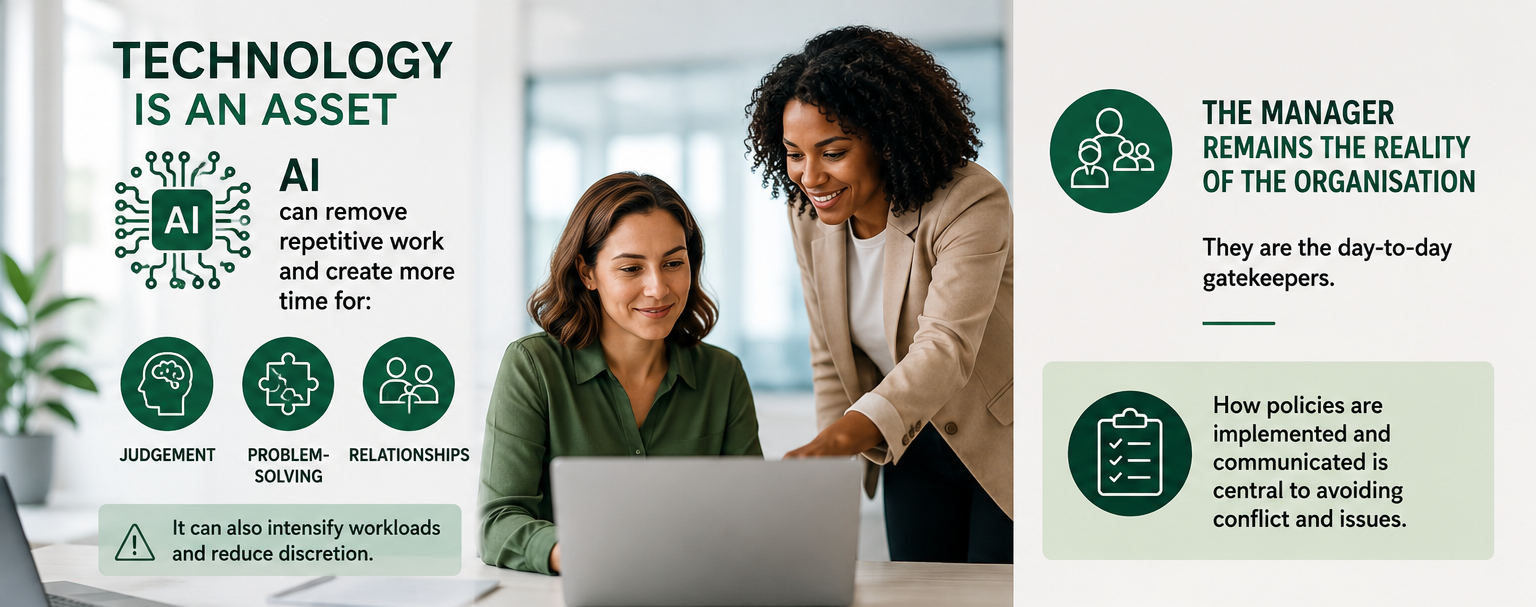
AI can remove repetitive work and create more time for judgement, problem-solving and relationships. It can also intensify workloads and reduce discretion.
The manager remains the reality of the organisation as they are the day-to-day gatekeepers. How policies are implemented and communicated is central to avoiding conflict and issues.
Work is becoming more human-centred because the old model is no longer enough. Businesses that understand this will navigate through legislation with fewer holes in the bucket.
Lincolnshire construction contractor Stirlin has commenced work on an exciting new office development in Aisthorpe, Lincolnsh...
Read MoreOngo is continuing its commitment to developing future talent with six new apprentices joining the organisation, taking the t...
Read More





Log into your account
If you have difficulty logging in, please reset your password. If you continue to experience issues, please email marketing@lincs-chamber.co.uk